Are Scottish Fold Cats Hypoallergenic? The Real Facts
If you’re allergic to cats but can’t stop looking at Scottish Fold kittens, you need a straight answer before you fall further: are Scottish Fold cats hypoallergenic? No — they aren’t, and neither is any other cat breed on earth. Every cat, Scottish Fold included, produces the Fel d 1 protein responsible for most cat allergies. That’s the science. But it’s not the whole story, and as a TICA-registered cattery that places Scottish Fold and British Shorthair kittens with families across NYC every year, we get this question constantly from people who love the breed but worry about their sinuses. Here’s what actually matters: how much Scottish Folds shed, how Fel d 1 really works, which breeds are genuinely lower-allergen, and what you can do if you’re set on bringing one home anyway.
Contents
- Are Scottish Fold Cats Hypoallergenic?
- What Actually Makes a Cat “Hypoallergenic”?
- Do Scottish Folds Shed a Lot?
- Scottish Fold Cat Allergies: What Prospective Owners Should Know
- Best Cats for Allergy Sufferers: How Scottish Folds Compare
- How to Reduce Allergens If You Still Want a Scottish Fold
- Common Misconceptions About Scottish Folds and Allergies
- Frequently Asked Questions
Are Scottish Fold Cats Hypoallergenic?
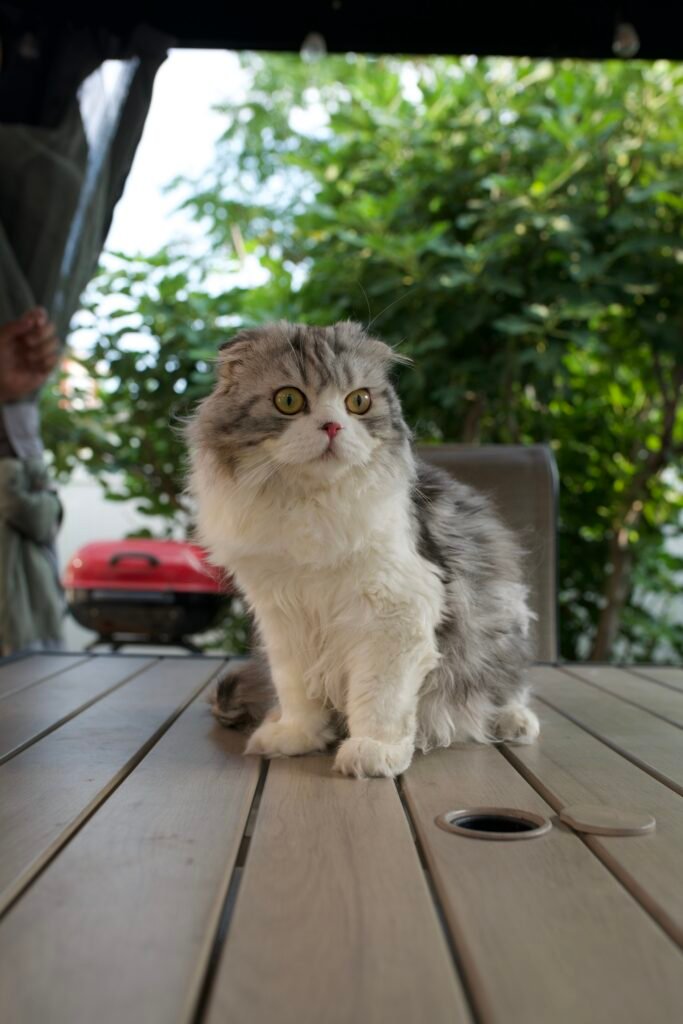
No. Scottish Fold cats are not hypoallergenic. Like every cat breed, they produce Fel d 1, the protein behind most cat allergies, in their saliva, skin glands, and urine. No peer-reviewed study has ever found a breed — Scottish Fold or otherwise — that is allergen-free. Individual cats vary in how much Fel d 1 they make, but that variation happens cat to cat, not breed to breed.
This isn’t a Scottish Fold-specific limitation — it’s true of every cat on the planet, including the breeds marketed as “hypoallergenic.” The Asthma and Allergy Foundation of America is direct about it: “a truly non-allergic dog or cat does not exist.” The Scottish Fold’s signature folded ears come from a cartilage mutation (more on that below) — they have nothing to do with allergen production.
What Actually Makes a Cat “Hypoallergenic”?
A cat marketed as “hypoallergenic” simply produces somewhat less Fel d 1, or sheds it less efficiently onto surfaces, than average — not zero. Fel d 1 is a small glycoprotein made mainly in a cat’s salivary and sebaceous (skin) glands. When a cat grooms itself, saliva coats the fur, dries, and flakes off as dander that becomes airborne and settles on furniture, clothing, and HVAC filters throughout your home.
Because the protein comes from saliva and skin — not fur itself — a cat’s coat length or shedding volume is only loosely connected to how allergenic it is. A hairless Sphynx still produces Fel d 1; it just distributes differently than it does on a longhaired cat. This is the detail most “hypoallergenic breed” lists gloss over, and it’s why a low-shedding cat isn’t automatically a low-allergen cat.
A small peer-reviewed study did find a real, measurable difference between individual cats: samples from cats marketed as hypoallergenic showed reduced Fel d 1 on the face and, even more so, on the chest, compared with typical cats (Butt et al., peer-reviewed ELISA study). So “produces less” is a real, testable phenomenon — it just isn’t the same thing as “produces none,” and it isn’t tied to any single breed the way marketing implies.
Do Scottish Folds Shed a Lot?
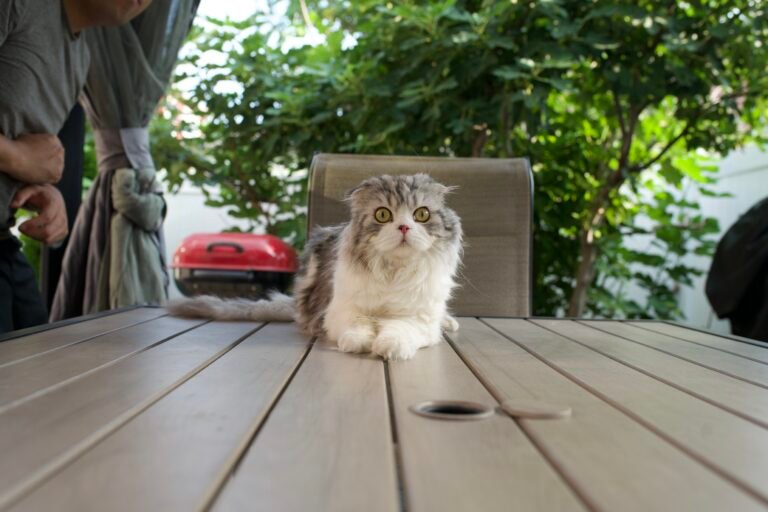
Scottish Folds shed a moderate, average amount for a cat — noticeably more during spring and fall coat blowouts, lighter the rest of the year. Both coat varieties (the classic short plush coat and the longer-haired “Highland Fold”) carry a dense double coat, similar to their British Shorthair cousins, which means loose undercoat builds up between brushings rather than a constant heavy shed.
We manage this the same way we manage it with our British Shorthairs: a weekly brush with a slicker or undercoat rake keeps shedding fur off your couch instead of airborne, and it cuts down the loose hair that carries dried saliva and dander around your home. If you already have a British Shorthair or are considering one alongside a Fold, our grooming guide for dense double coats walks through the exact routine we use with our own cats.
Here’s the part that surprises people: shedding level and allergen level are not the same measurement. A cat that barely sheds can still leave plenty of Fel d 1 on your sofa via saliva and skin contact, and a cat that sheds visibly can be perfectly tolerable for some allergy sufferers. Brushing helps with both, but it isn’t a hypoallergenic guarantee either way.
Scottish Fold Cat Allergies: What Prospective Owners Should Know
If you have diagnosed cat allergies and you’re considering a Scottish Fold, treat it exactly like you would any other breed: assume moderate allergen exposure, plan your home accordingly, and test your own reaction with the specific cat before committing. Scottish Folds carry no known allergen advantage or disadvantage compared with the average domestic cat.
A few underlying facts worth knowing before you decide:
- Cat allergies are common. Between 10% and 20% of the global population reacts to cats and dogs, according to the Asthma and Allergy Foundation of America, and cat allergies run roughly twice as common as dog allergies.
- Sex and neuter status matter more than breed. A peer-reviewed analysis found intact male cats produced a geometric mean of 5.46 U/g of Fel d 1 versus 1.28 U/g in neutered males — over 70% of intact males landed in the highest-allergen quartile, while no intact females did (Fel d 1 review, PMC). Every kitten we place is spayed or neutered before or shortly after pickup, which works in your favor here regardless of breed.
- Fel d 1 sticks around. The protein clings to soft surfaces and can persist in a home for months after a cat is gone, per the same AAFA guidance above — worth knowing if you’re moving into a space that previously had a resident cat.
- Individual reaction varies. Two people with “cat allergies” can react very differently to the same cat. If possible, spend real time with an adult Scottish Fold — ideally the parents of the litter — before you commit, not just a few minutes at pickup.
Our own Scottish Fold breeding cats are health-tested and raised in-home, which won’t change their Fel d 1 output, but it does mean you can visit and see exactly how you react before a kitten comes home with you.
Best Cats for Allergy Sufferers: How Scottish Folds Compare
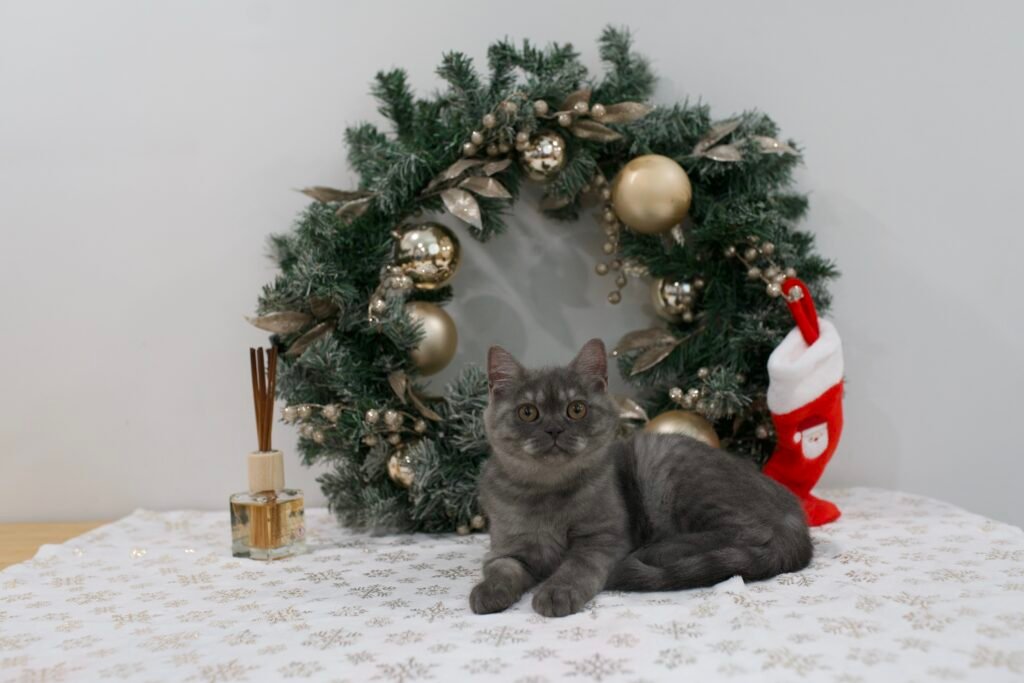
No breed is truly hypoallergenic, but some are consistently reported as easier on allergy sufferers than others — usually because of lower Fel d 1 output, a coat that traps rather than releases dander, or both. Here’s how the commonly recommended breeds stack up against the Scottish Fold, based on veterinary-reviewed breed guidance and the research above.
| Breed | Coat Type | Shedding Level | Reported Fel d 1 Output | What to Know |
|---|---|---|---|---|
| Siberian | Long, dense triple coat | Moderate–heavy, seasonal | Often reported lower | Popular allergy-sufferer choice, but not guaranteed for every allergic person |
| Balinese | Semi-long, single layer | Low | Often reported lower | Related to the Siamese; minimal undercoat to trap dander |
| Russian Blue | Short, dense double coat | Low–moderate | Reported lower per PetMD | Dense coat holds allergen close to the skin instead of releasing it |
| Sphynx | Hairless / peach fuzz | Minimal loose fur | Average — not lower | Skin oils build up without fur to absorb them; needs frequent bathing |
| Bengal / Siamese | Short, single layer | Low | Average — not lower | Low shedding is often mistaken for low allergen output |
| Scottish Fold | Dense plush double coat (short or semi-long) | Moderate, heavier seasonally | Average, same as most breeds | No allergen advantage, but predictable, manageable shedding with weekly brushing |
The honest takeaway: if minimizing allergen exposure is your top priority above all else, a Siberian or Balinese has a slightly better track record than a Scottish Fold. If you’re choosing a Scottish Fold for its personality, folded ears, and temperament — as most of our families do — pair that choice with the allergen-reduction steps below rather than expecting the breed itself to solve the problem.
How to Reduce Allergens If You Still Want a Scottish Fold
You can meaningfully cut your exposure to Fel d 1 without giving up on the breed. None of these make a cat hypoallergenic, but combined, they measurably lower how much allergen ends up in your air and on your surfaces.
| Strategy | What It Does | Measured Effect |
|---|---|---|
| Spay/neuter | Removes the androgen-driven boost in Fel d 1 production | Intact males averaged 5.46 U/g vs. 1.28 U/g in neutered males |
| HEPA air filtration | Captures airborne dander particles (Fel d 1 particles are under 5 microns) | Reduced airborne Fel d 1 from 36.3 to 4.7 ng/m³ in one study |
| Weekly brushing | Removes loose fur and dried saliva before it becomes airborne dander | Not independently measured, but reduces the dander reservoir directly |
| Cat-free bedroom | Gives you nightly recovery time away from allergen-saturated air | Standard allergist recommendation (AAFA) |
| Low-pile flooring, washable bedding | Removes the surfaces that trap and hold allergen long-term | Fel d 1 can persist in carpet and fabric for months after a cat leaves |
Source for the neutering and HEPA figures: peer-reviewed Fel d 1 review, PMC. Every kitten that leaves our cattery is already altered, so you get that reduction built in from day one — you’re only responsible for the environmental side.
Beyond the table, two things we tell every allergic applicant: talk to an allergist before you commit, and spend supervised time with an adult Scottish Fold (ideally a parent cat) before falling in love with a kitten photo. Reaction to one cat doesn’t always predict reaction to another, even within the same breed.
Common Misconceptions About Scottish Folds and Allergies
Myth 1: Scottish Folds are hypoallergenic because of their ear-fold gene
The folded ear comes from a cartilage mutation (an autosomal dominant gene affecting cartilage development) that shapes the ear — it has no connection to the glands that produce Fel d 1. You may see this claim on breeder marketing sites; it isn’t supported by any genetics or allergy research we could find, and it directly contradicts the veterinary and allergy-research consensus cited throughout this article.
Myth 2: A low-shedding cat is a safe cat for allergies
Shedding volume and Fel d 1 output are only loosely related. Fel d 1 comes primarily from saliva and skin glands, not the hair shaft itself, which is why hairless breeds like the Sphynx still trigger reactions in allergic people despite shedding almost nothing visible.
Myth 3: If you don’t react immediately in the room with a cat, you’re not allergic to it
Fel d 1 is airborne, extremely lightweight, and sticky — it rides on clothing, settles into fabric and carpet, and can linger in a space for months after the cat is gone. A quick 10-minute visit often isn’t enough to reveal how your body responds to sustained daily exposure; allergists generally recommend longer, repeated contact before drawing conclusions.
Frequently Asked Questions
Are Scottish Fold kittens hypoallergenic?
No. Scottish Fold kittens, like Scottish Fold adults, produce Fel d 1 in their saliva and skin glands from a young age. Kittens can sometimes seem milder simply because they’re smaller and groom less than adult cats, but that’s a volume difference, not a hypoallergenic one.
Do Scottish Fold cats shed more than other breeds?
Scottish Folds shed a moderate, average amount, comparable to other dense-double-coated breeds like the British Shorthair. Expect heavier shedding during seasonal coat changes in spring and fall, and lighter shedding the rest of the year with regular brushing.
What is the most hypoallergenic cat breed?
No breed is truly hypoallergenic, but Siberians and Balinese are the two most consistently reported as easier on allergy sufferers, based on lower measured Fel d 1 output in some studies and anecdotal owner reports. Individual reaction still varies cat to cat.
Can I own a Scottish Fold if I have mild cat allergies?
Possibly. Many people with mild cat allergies tolerate a specific cat well after spay/neuter, HEPA filtration, and a consistent grooming routine. Spend real time with the adult cats before committing, and talk to your allergist about what “mild” means for your specific triggers.
Does neutering a Scottish Fold reduce allergens?
Yes, meaningfully. Peer-reviewed research found intact male cats produce roughly four times more Fel d 1 than neutered males. Every kitten from our cattery is already spayed or neutered, so this reduction is already in place before the kitten comes home.
Ready to Meet Your Future Scottish Fold?
If you’ve weighed the allergy facts and you’re still drawn to the breed’s folded ears and easygoing temperament, the next step is meeting the cats in person. Browse our available Scottish Fold and British Shorthair kittens, review our kitten care guide for what life with a Fold actually looks like day to day, and when you’re ready, start your application — we’ll walk you through everything, allergy questions included.